
Two Hours in a Freezer with a Climber and an Ultra Runner
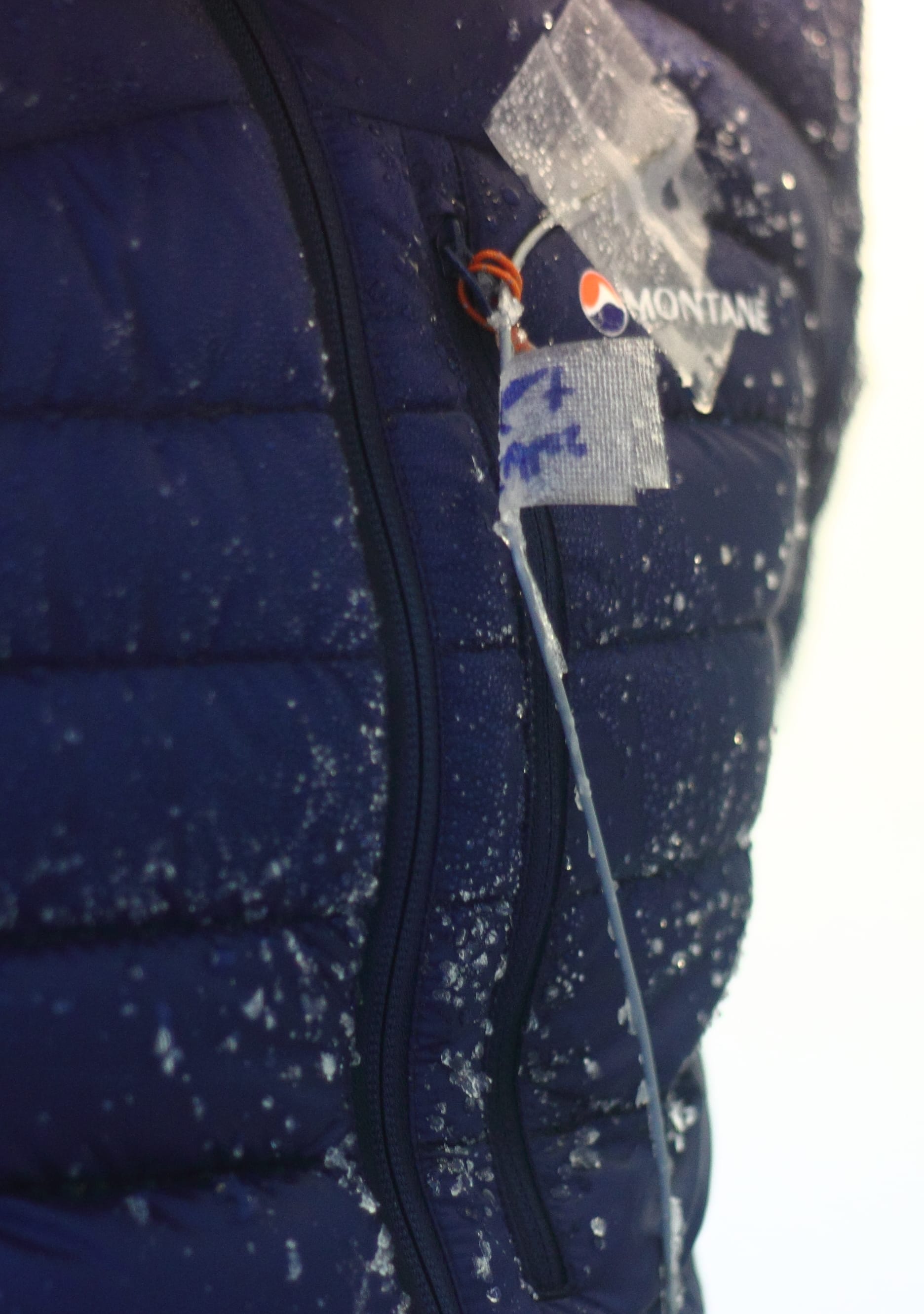
Frosting beginning to build up on Andy’s jacket
Have you ever wondered how outdoor kit is tested? Recently I was lucky enough to be invited to witness the testing of some Montane down and synthetic down insulation pieces at Northumbria University.
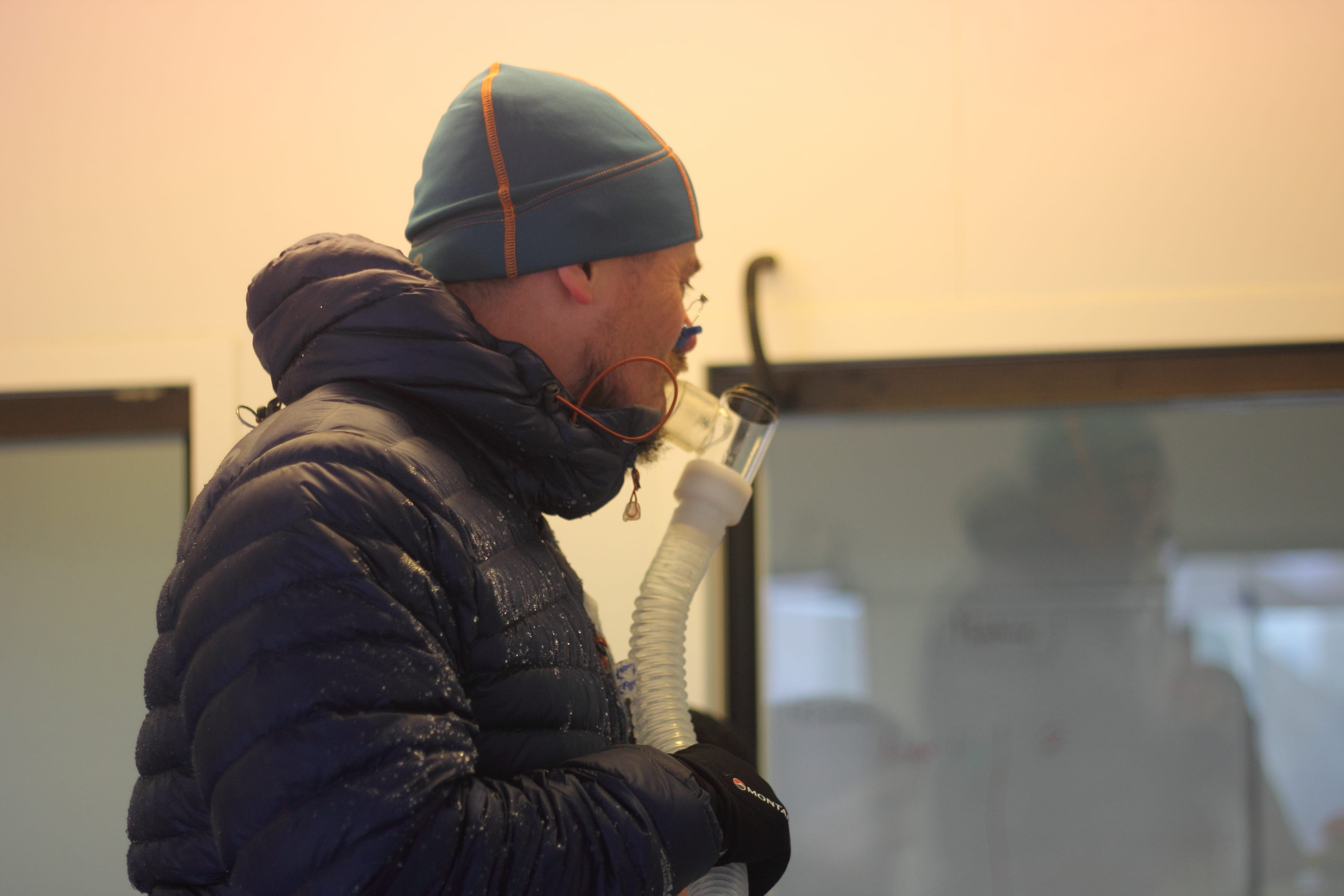
Montane Athlete used to the cold, Andy Kirkpatrick
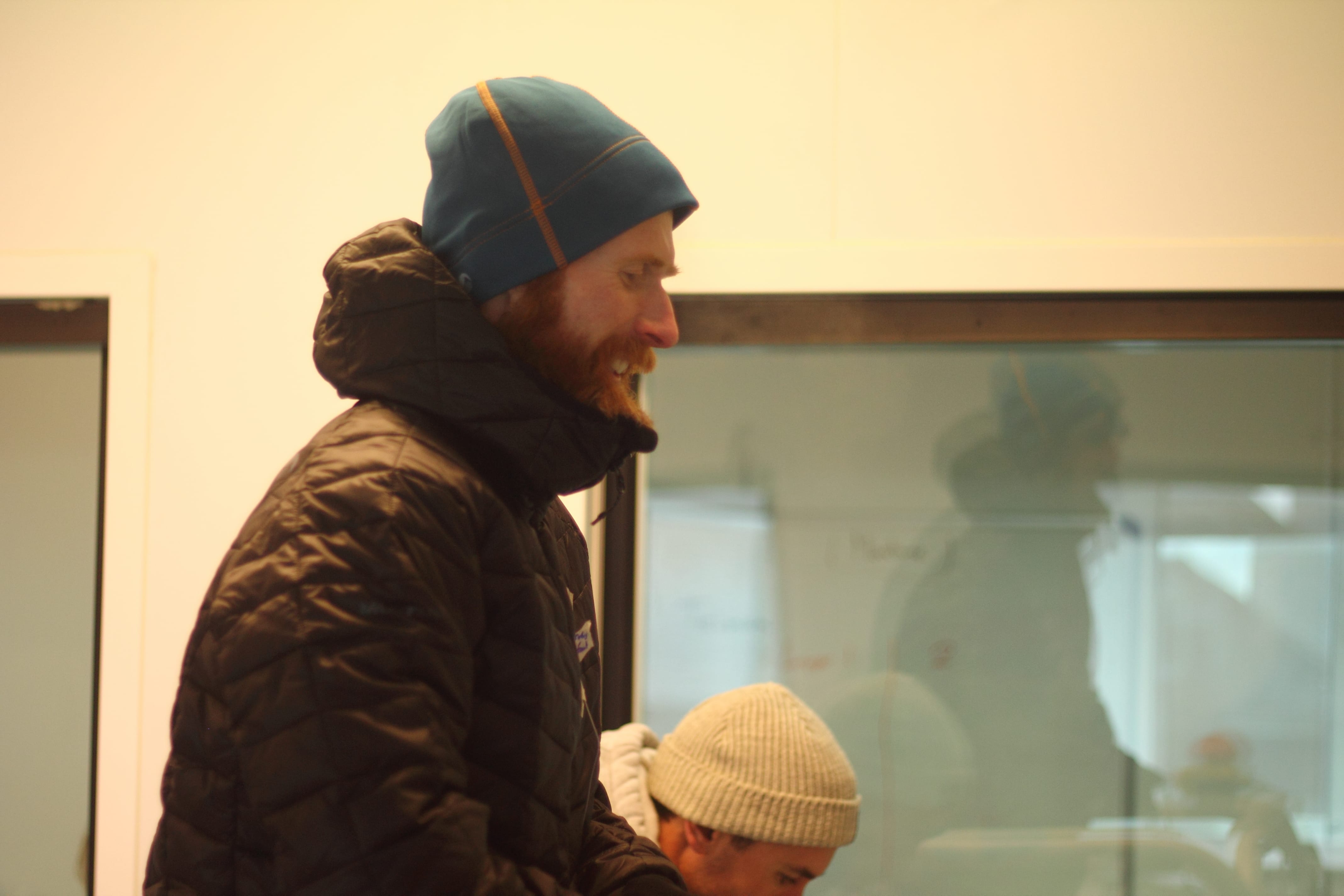
Montane Ultra athlete, Marcus Scotsby
Montane had arranged for Montane athletes, Andy Kirkpatrick and Marcus Scotney to attend the cold chamber in the sports science department at Northumbria University. First the athletes needed to be wired and probed. Temperature monitors were taped to the outside of the jackets, to the athletes bicep under the jacket and inserted into the the athletes backside (yes, you read that right!) in order to take a core temperature.
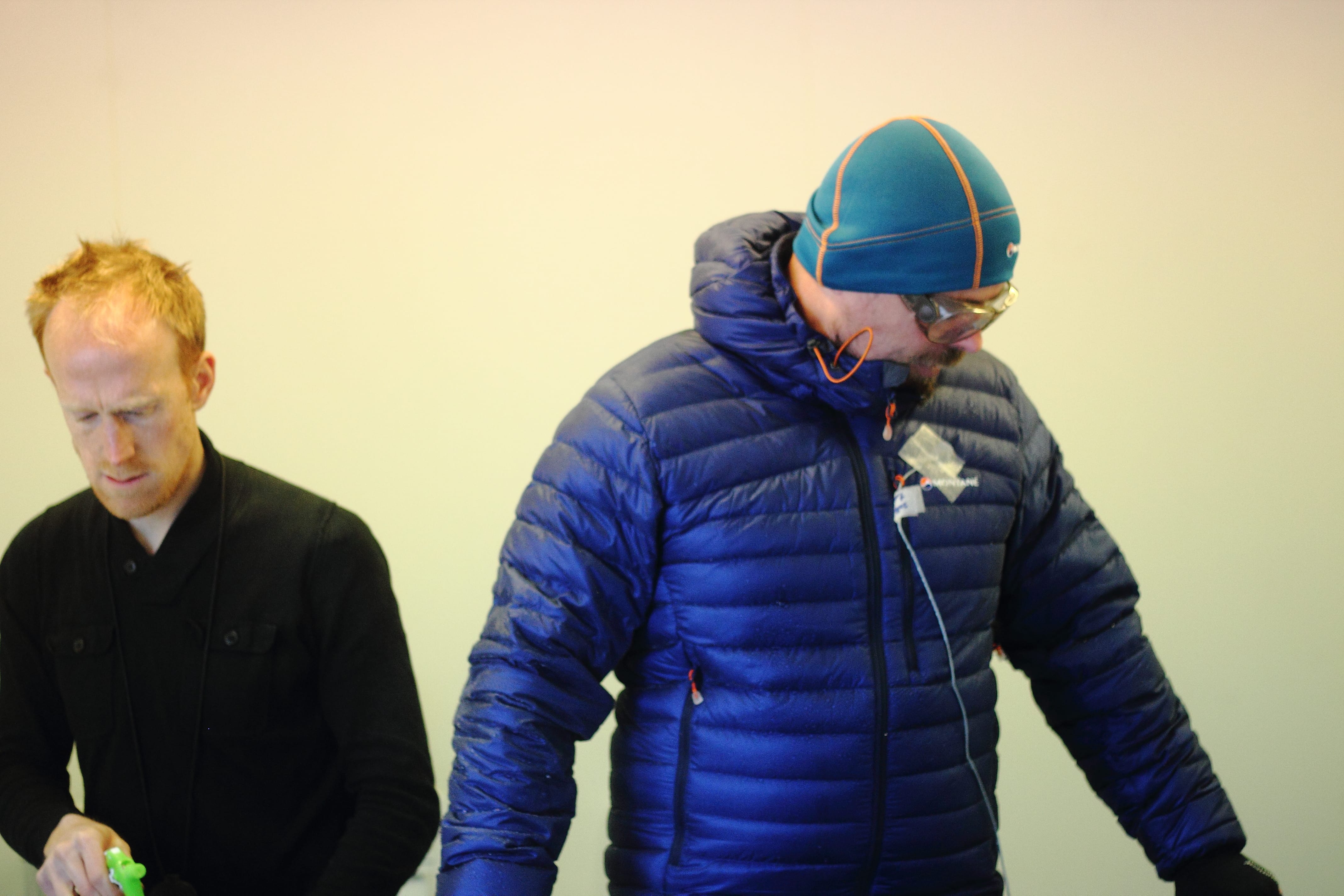
Pre-Chamber Readings
Before heading into the chamber a number of readings are recorded to establish the control levels. These included a temperature reading as well as tidal breath and comfort levels. Finally, a thermal image is taken before the athlete is sprayed with a precise amount of water to simulate percipatation.
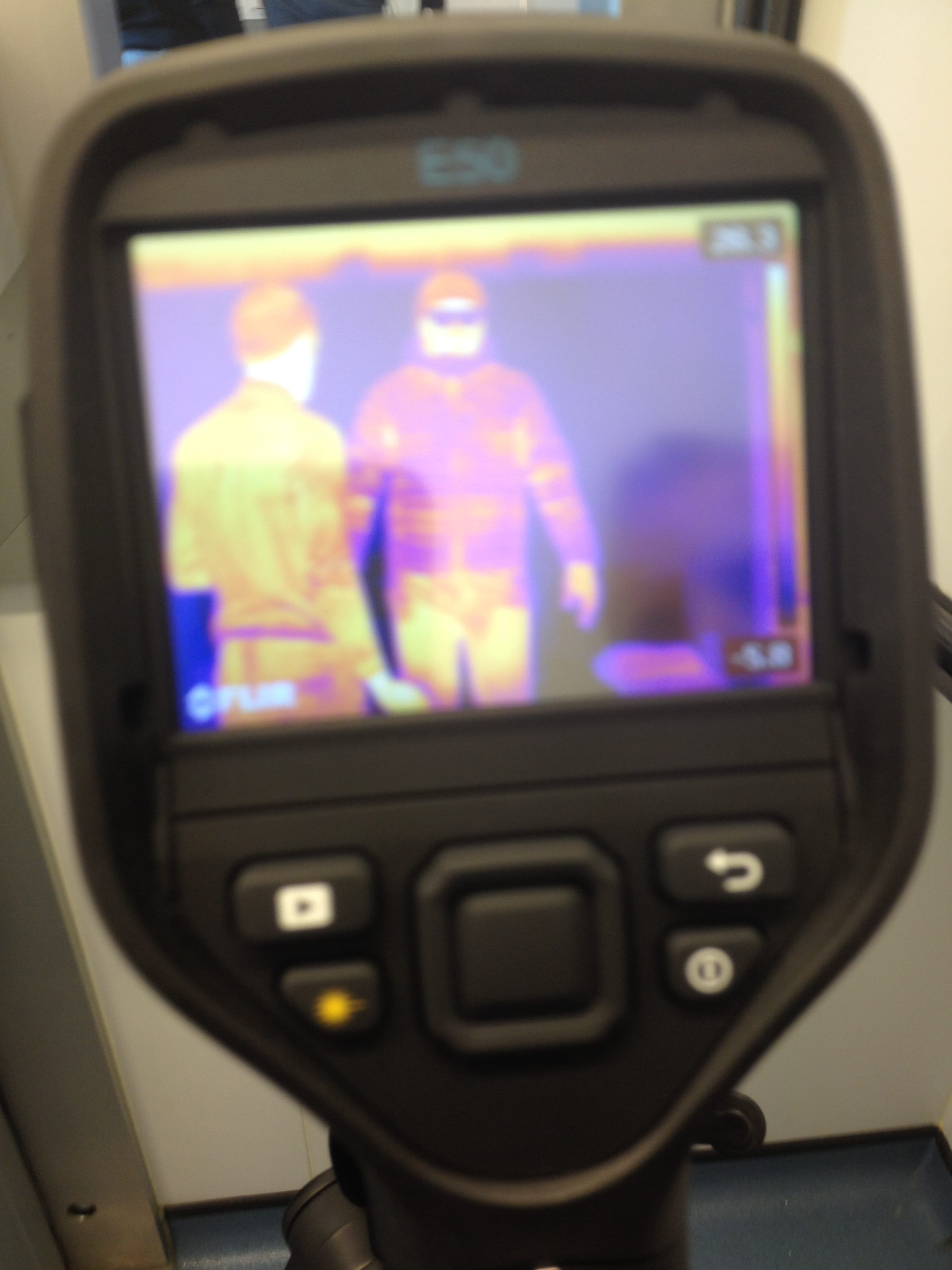
Heat zones
The testing process then begins and on this occasion it lasted for two hours, starting with the athlete sitting and resting. They then progressed to a brisk walk on the trend mill, with readings being taken every 15 minutes. During the process the temperature is maintained at freezing as the rate of exercise increases. After the testing phase is completed all of the data is analysed by the designers and the scientist to see if any improvements are needed.
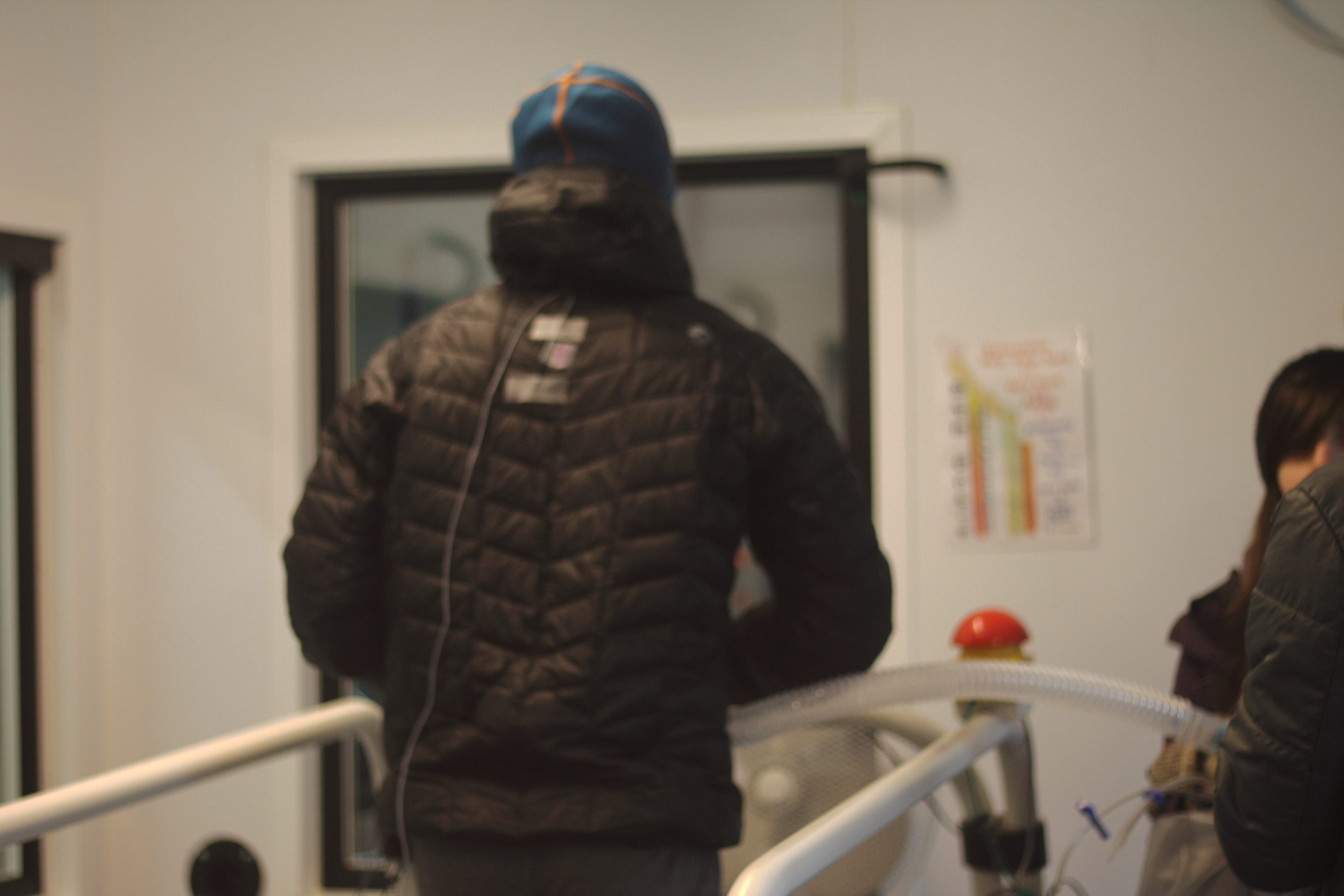
Marcus setting the pace
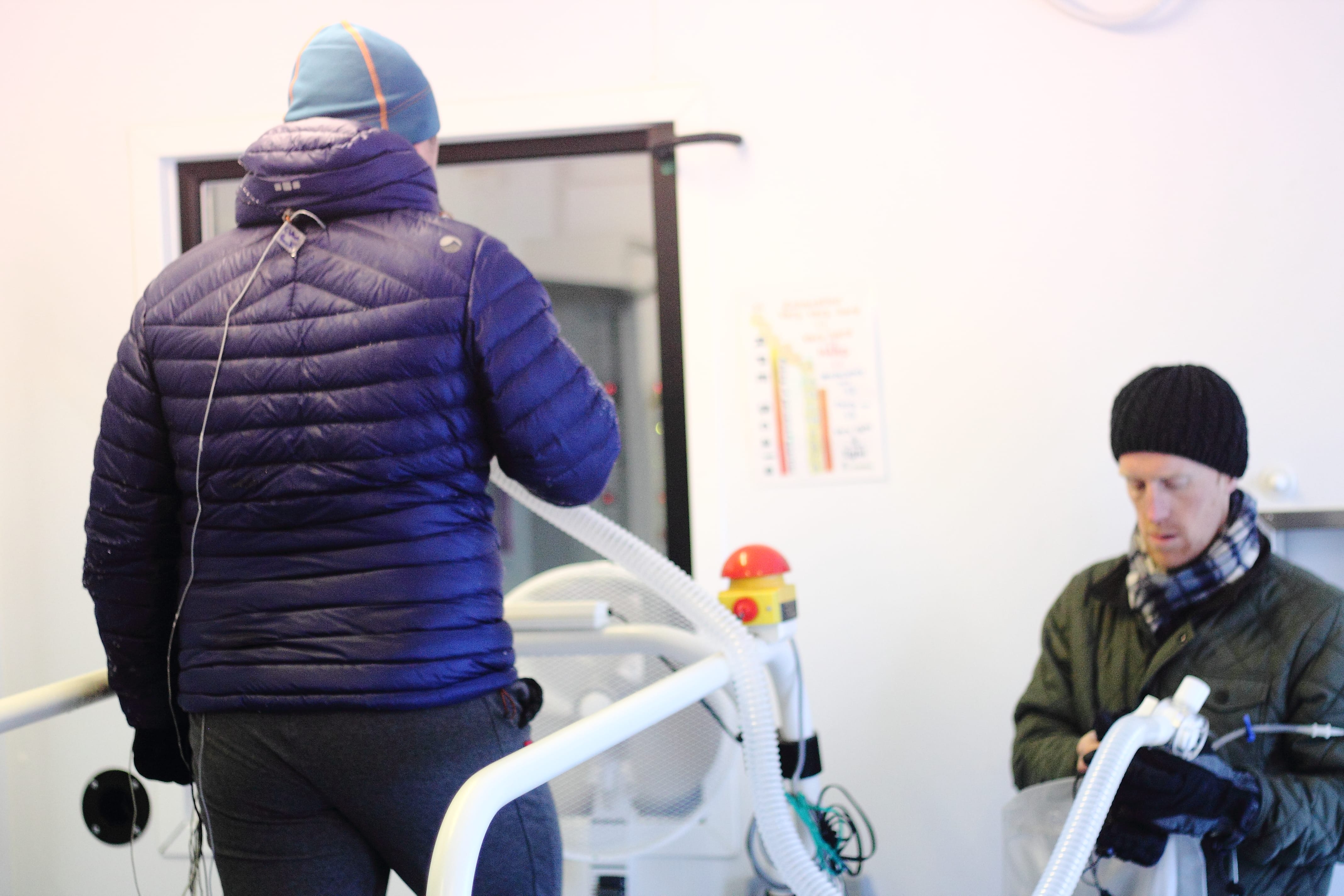
Andy Kirkpatrick going through the paces on the tread mill
Comments are closed here.